

Overview
In this episode of The iGaming SEO Show, we’re joined by Elaine Gardiner, founder of TAG Media and Affie.ai, to discuss the future of affiliate marketing in iGaming and the impact AI is having on the industry.
We discuss:
- The current state of iGaming affiliate marketing in 2026
- Whether new affiliates can still break into the industry
- How AI is changing affiliate management and acquisition strategies
- The opportunities and risks AI presents for affiliates
- The future of SEO for affiliate websites Whether operators are catching up to affiliates in search
- How Affie.ai is using AI to support affiliate programmes
- Whether fully automated affiliate programmes are on the horizon
- What the affiliate landscape could look like over the next 2–3 years
The Transcript
Hi everyone, and welcome to The iGaming SEO Show. I’m Ari, and today I’m joined by Elaine Gardner, someone I met a long time ago when I was an affiliate back in the day. Elaine, how are you doing?
Yeah, good. It’s nice to see you again. It’s nice to kind of come full circle — like you said, I’ve known you for a long time, so it’s great to be on the podcast.
Thank you for coming. I think we met somewhere abroad, but we’re both in Ayr now, which is quite strange — two people from the same place meeting each other, especially somewhere as small as Ayr.
Yeah, exactly. I think we might be the only two people in gaming in Ayr. That’s why I’m here.
So you’re from Tag Media, and you’ve also just launched a startup called Afy.ai. I thought it would be good to break away from the constant SEO talk and have you in to discuss the AI affiliate management side — and affiliates in general, what’s happening in that space. I used to be an affiliate, now I run an agency, and we’ve actually started running affiliates again. It’s night and day compared to what I was doing 15 years ago. Can you give the viewers a bit of background on yourself?
What’s your background in the industry?
I’ve been in affiliate management for about 17 years. When I started I was an affiliate manager for an operator — that’s how we met when you were an affiliate — and over the years I worked my way up to head of affiliates. For the last five years I’ve been Managing Director at Tag Media. The way I like to describe it is rent-an-affiliate-manager, or rent-an-affiliate-team. If anybody wants to start up their affiliate programme, launch it, scale it, or if they’ve got a problem — like their head of affiliates has suddenly left for whatever reason — we’re literally a plug-and-play team. It’s a service the industry’s needed, which has been exciting. I’ve absolutely loved it, actually, because I’ve got to see so much more. When you’re at an operator you have one or two brands, a couple of markets, and you’re laser-focused. On the agency side, you can have one call about casinos in Vietnam and the next call is about a cryptocurrency casino — there’s so much variety, and you learn so much.
What’s the conference scene like for affiliate managers these days?
Do you remember back in the day there were red badges for operators and yellow for affiliates? You’d get absolutely attacked by everyone — but I’m not sure it’s changed that much. It depends on the conference, but there’s still more and more pressure on affiliate managers to perform, to get new affiliates on board, and they’ll harass you for it. I remember last year someone stopped me because they saw I had an affiliate band on. I told them I was on my way to a meeting, but I was actually going to the bathroom, and they said “I’ll walk with you.” I was like, can I please just have a bathroom break? They are so aggressive — they’ll stop you mid-conversation. It’s getting worse.
For me personally, going to conferences was always good for doing deals and meeting the people behind the brands. I’d always worked remotely, so it was great to meet people face to face. But it’s definitely relentless for affiliate managers.
What does an affiliate manager actually do day-to-day?
Every other department thinks we’re the ones just spending money, throwing it away, going to conferences and having parties — but it’s not like that at all. I always describe it as the jack of all trades, master of none. You have to know a little bit about everything so you can talk to every department. You need to know enough about SEO to know there’s been a Google update affecting affiliates. You need to be good at booking travel and taking affiliates out. You need to be a data analyst, check payments, know a little bit about UX, troubleshoot tech issues. There’s so much the job entails beyond just selling the brand.
It kind of splits into two categories, and that’s how I’ve always built my teams. You either have the tech side — the people who love Excel, the ones you rely on for reporting and analysis — and then you have the salespeople who hate Excel but are great at closing deals. When I hire someone I ask: would you rather be in a bar talking to affiliates or in Excel? The answer tells me where to put them. I accept that not everybody is good at everything, so I split the teams accordingly.
It’s like running a small business sometimes — you’re a therapist, a bouncer, you’re buying gifts, chasing payments, presenting, talking. You just have to do a little bit of everything.
How has the affiliate channel landscape changed?
The diversification of sources is getting bigger and changing every day. Ten years ago SEO was king — everybody was doubling down, going into different markets and different countries. Then PPC came in. SMS and email, which used to be considered low quality depending on the market, are kind of coming back now too. We obviously have retargeting, streaming, social, paid media — so many channels.
Because everything’s kind of not new but new to gaming affiliation — where SEO and PPC were your core before — adding all these channels is opening up more opportunities for fraud, which is a real problem. These are all relatively unexplored channels, so people are taking advantage of others’ lack of knowledge around them, especially with crypto as well, because it’s a little less traceable and a bit more anonymous.
There’s always been affiliate fraud — you’d have seen it back in the day. The misspelled domain on an email asking for payment. Now with AI it’s getting very sophisticated.
How sophisticated is affiliate fraud getting?
I’ve seen and read about fraud being able to pass KYC checks — generating fake passports good enough to bypass them. It’s getting more and more complex. I’m of two minds about going into too much detail, because you don’t want to give people ideas on how to scam operators, but it’s also important to create awareness of it. As soon as you stop one method, another one pops up.
Streaming is a big one. There was always image manipulation for fake stats, but now you can have AI streamers that look completely real, so you don’t actually need a person sitting there to stream slots. You can have AI streamers and fake viewers — a whole fake setup. You go to an inexperienced company or a new brand with an inexperienced affiliate manager, demand payment, and vanish. Crypto — see you later. It’s happening so much.
Is it typically a tenancy deal or CPA?
It can vary. There are fraud rings — I’ve heard stories of people sharing wallets. If the operator isn’t on top of fraud detection, you can have a streamer say “I’ve got 20 FTDs” when they’ve just deposited in and out of the same wallet with the same funds, triggering all the signals. Because it’s a crypto account it’s anonymous, or they just have an email address, so it’s a lot easier to commit fraud. People are catching up with it now, but if you are not on top of fraud detection at the moment, it’s so easy to get caught out.
Is there any such thing as a risk-free channel right now?
There almost isn’t. You’ve got SEO — as an operator you can pay tenancies, get first position, and then a DMCA strike takes it straight down and you lose all your traffic. PPC — you invest in that and it gets shut down overnight. Streaming and social — we’ve talked about the fraud. There’s just no golden channel at the minute, and that’s exactly why you need to diversify to have any stability. Even affiliates relying purely on SEO as a business model can be risky. We see a lot of affiliates come to us who rely on SEO, get hit by an update or a DMCA strike, and when they get the page back reindexed it’s not on page one and they have to climb all the way back up. Like any business, diversifying is future-proofing. Build an email list, and once you have sustainable SEO growth start investing in another channel instead of going all in on one.
The problem with new channels is that they’re unexplored, so there’s always a trust issue. Affiliates come to us and say, “If you give us €20k in marketing spend, we’ll buy it and take a margin.” Operators are wary — “Why should we do that? We could do it ourselves.” “Well, if you could do it yourself, you would.” But operators are genuinely crying out for new traffic sources that aren’t fraudulent.
What’s it like launching as an affiliate today? Are there still real opportunities?
Absolutely — but not the old school way. An English-only SEO website targeting English-speaking markets? That’s done. Unless it’s really, really niche, it’s going to be very difficult. If you’re going to start as an affiliate, look for new sources and new types of traffic. Try to get ahead of the trend. The biggest chance of succeeding now is thinking about how people are going to consume content in six months or a year, and getting there before everyone else. I don’t know exactly what that looks like — if I did, I’d be doing it — but streaming, retargeting, social media buying, the rise of AI rankings. You need a bit of a crystal ball.
You look at social before: it would have been Facebook traffic or Twitter tipster groups. Now it’s Snapchat, influencers, TikTok, all of that. You need to think about how people are consuming content now. I remember looking at advertising on dating websites back in the day — buying banners on Plenty of Fish, and it had crazy traffic. Just trying different things. There are also AI-integrated ads coming soon, so that’s going to be another channel. Interesting times.
What channel do you think is going to come out on top?
Streaming is quite interesting, though there’s the fraud problem we discussed. I know someone who’s actually building tools to fight against that — Martin — who’s got a new platform for it, which I thought was impressive.
I actually think SEO is going to win long-term. You had Google and Bing before — who cared about Bing? Ask Jeeves? — but now you have ChatGPT, Gemini, Claude, all these different engines, and everybody’s in a race at the moment. Google AI Overviews have been a bit of a mess since they rolled out, and on top of that you’ve got parasite SEO, black hat DMCA strikes — half the results in the SERPs are taken up by black hat websites. I think everyone’s so focused on the AI race that they’re ignoring the channels that bring in most of the money right now.
But the good news is you can do SEO for all these different engines, and whichever one wins, you’ll still need to optimise for it. It’ll be the next stage of what we have now — the same applies to paid media. More targeted, more personalised. My algorithm on social is already a little bit too specific. And I think that’s going to cross over into everything if they can extract the data — which they probably already are.
I actually discovered this by accident: I use a radio app on my phone and started getting loads of gambling ads. I thought, this can’t be good for kids. Then I realised — they’ve personally profiled me on the app because I’ve been visiting gaming sites for work. So I’m getting retargeted via radio. I didn’t even know that was a thing. You only learn by testing and doing and trying to break things.
Is there a risk of AI overconsumption becoming a problem?
We were talking about this at the Power 50 Affiliates event last week — people are developing a natural distrust of anything they know is AI-generated. Anyone who knows what to look for spots it immediately. If I see an M-dash, I’m out. It’s obviously AI. Please at least put “don’t use M-dashes” in the prompt. Anything I know is AI-written gets zero trust from me.
But there’s also the overconsumption side. We’re bombarded with so much content. The algorithm gets so specific — if you linger on a roast dinner video for a second too long, it profiles you as the world’s biggest roast dinner fan and that’s all you see for a week. I’ve actually reset my algorithm because it got too specific. And personally, there are times I’m consuming content and I need to just put the phone down and go outside.
I think the trend in a couple of years might actually be people genuinely going offline. I heard someone on a big podcast say the two businesses he’s investing in right now are polar opposites: AI and cafes where you can go for a digital detox — no Wi-Fi, read a book, play a game. We’re more connected than ever but more disconnected than ever.
The other issue is people trusting AI blindly. I use it all the time — it probably knows everything about me, which is quite scary — but if you don’t actually give it proper prompts and push back on it, it’ll quote you things that are completely fabricated. When you question it, it can’t give you sources because it just made them up. Any answer it gives me, I make sure it can actually back it up. There’ve been cases of what people are calling AI psychosis — AI actively encouraging harmful behaviour and telling people “that was so brave of you.” It’s genuinely dangerous.
The source fabrication one is funny though — I was looking for inspiration on what affiliate managers were using AI for, and it quoted one of my own posts back at me. “Oh, you should like this post from Elaine Gardner.” That’s me. Give me someone else. Great that I’m ranking well in it, but that’s not what I was looking for.
How are affiliate managers actually using AI in their work right now?
It varies enormously. The most common thing is people just uploading affiliate data into ChatGPT without really thinking about whether that’s a security issue in itself. But I’ve been doing some proper testing on this because of the tool I’m building, and some of the results were concerning.
I tested different models — ChatGPT, Claude, Grok and Gemini — by uploading data and asking how they’d analyse it and what to do with affiliates. ChatGPT was the worst. It suggested motivating top partners by prepaying them more CPA. Don’t do that. But the concerning thing across all four models was that for any affiliate who hadn’t been converting or sending traffic, every single one suggested shutting their accounts down — with no further context. So it could see an account like Big Pond Digital hasn’t sent any traffic and say “shut them down.” If affiliate managers are trusting that advice blindly, it’s going to cause serious problems. AI can be great, but it’s also causing people more problems in other ways in equal measure. Using it to give you direct advice on how to do your job is a very bad idea at this stage. For inspiration or speed, yes. For strategy, no.
So what is Afy.ai, and how did it come about?
We just launched yesterday — exciting and terrifying at the same time. The problem it solves came out of training affiliate managers, both through Tag Media and more broadly. The biggest gap everybody was hungry to fill was the maths side — understanding industry standards, analysing a deal, knowing when to stop one, even basic Excel.
I remember about ten years ago, I was always in Excel — VLOOKUPs, pivot tables, merging sheets. My colleague next to me used to pick up a notebook every week and scribble in it. I eventually asked what he was writing. He said he was writing down his affiliate stats. I looked closer and he’d ruled it all out with a ruler and was filling it in by hand. He didn’t use Excel at all. I went twelve years in my career frustrated by that — how can you not use Excel? And I kept seeing the same gap when I was training people.
Then AI started coming out, and I had a note in my phone about a calculator I needed to build — specifically to show someone on my team how to calculate the break-even point. If you pay €100 plus a €50 CPA, how much revenue do you need before you’re breaking even? When it’s a hybrid deal, everyone ends up doing the maths on their fingers. I’d always been able to do it in my head but couldn’t get it down into a tool, so I just kept avoiding it.
I eventually tried Grok, just gave it a prompt, and within minutes it had built me a site where you plug in the fixed fee amount and the hybrid, click a button, and instantly it tells you the break-even. A problem I’d been trying to solve for a year, done in minutes. I showed the team and they loved it. Then I thought — what else can I do?
The idea became: if I can download the logic from my brain on how to analyse campaigns and put it into Afy, then everybody has me on demand, 24 hours a day. Everything I would do — which affiliates are underperforming, which deals are underperforming, where to put your money, whether there’s any fraud — it alerts you instantly. No more reports needed. You plug it in and all my logic over the years is in there.
The reality of affiliate management is that admin is always the first thing to drop when you’re being screamed at on WhatsApp, Telegram, email and in board meetings simultaneously. Because we’ve combined it with machine learning, we can predict the profitability of a campaign within about two to three days. Based on your historical data, average values in that market, and trends, we can look at a campaign within three days and say — that’s going to be unprofitable if you keep running it through to the end of the month.
Normally you’d run a test for a month or two, lose money, review it, and then stop it. We can do that within three days. Or we can say: if you adjust the CPA down slightly, it will become profitable. The flip side works too — if something’s going really well early, we’ll tell you to take the cap off, move up a few positions, get more traffic.
Does that mean affiliate managers can handle more deals?
They’ll have time to do more, but more importantly they’ll stop unprofitable deals faster. So they save money and reinvest it into deals that are actually making the company money. It just makes you more efficient. We’re not replacing affiliate managers — you’re increasing their efficiency. Rather than waiting two months to know if a campaign is working, you know within a couple of days.
Where does Afy.ai go from here?
It’ll go more in depth. Right now it handles the fundamentals — which affiliates have stopped performing, where conversions have dropped, spotting fraud patterns. The nuance is the tricky part: ChatGPT and Claude can suggest things like “look for deposit clustering around certain times,” which is right, but they don’t actually know what data you have in your system. You rarely even send deposit times within the affiliate data. Knowing what’s actually available and what you can do with it — that’s the specific knowledge that generic AI doesn’t have, but that we do. So we’ll keep expanding it, keep solving those admin issues that eat up affiliate managers’ time.
How do you see the affiliate model changing over the next two or three years?
There’s a real problem with the model right now, and I’m not sure what the solution is. Because so many operators have shut down or stopped paying commissions, there’s a significant trust issue between operators and affiliates. That’s led to affiliates charging more fixed fees and tenancy fees — ten years ago that was rare, now almost every affiliate wants a listing fee as standard. Sometimes it’s just £250 to cover content writing, but imagine you’re paying a writer, getting the backlinks sorted, and then the brand goes bust two months in and you’ve had no FTDs. Affiliates are using those models as a security blanket.
The problem is it prices out new brands. There’s a disconnect — the trust issue is real and understandable, but the industry has created it by having too many operators shut down without paying. So affiliates lose trust, they start charging more, rightly so, because they have costs to cover.
On the revenue share question — for a while affiliates were pushing toward “we’re going to go revenue share, we want to be sustainable.” But too many operators are shutting down, so lifetime revenue share is no longer really lifetime. The volatility of markets, licensing, SERPs, and companies — we’ve seen massive companies shut down or lay off staff. There’s very little certainty. I think affiliates will keep going for quick wins — CPAs and tenancies.
One thing I think we might see before any wholesale change to the commission model itself is more security around payments — something closer to an escrow setup, where both parties need to deliver their end to get paid and get results. I have a feeling we’ll go there first before actually changing the whole commission structure.
Are affiliates ahead of operators when it comes to SEO and AI tactics?
Some of them, definitely. What I see a lot is operators with zero SEO strategy doubling down 100% on affiliates. Every time I speak to an operator I say: you can’t just have affiliates as your only channel, you need different traffic sources. But they come back with “everyone knows affiliates is the most cost-effective and easy one — we just pay them revenue share.” And I’m like, no, you can’t just do that anymore.
The bigger operators are more savvy, but the smaller ones definitely not. They launch, they lean on affiliates, they do reasonably well — and then affiliates take all the branded traffic. We do a lot of brand protection work. I’ll sometimes speak to operators who say “affiliates can’t rank for our brand.” And I say: you’re doing no SEO as an operator, and you don’t want the affiliate to even mention your brand name? What are they supposed to write a review with? You need to outrank yourself. You need to outrank them.
The brand protection micro-site tactic — having a few assets protecting your top positions — is a smart move. If you own first position and then have affiliates filling everything after that, and then you’re paying affiliates for that branded traffic, and wondering why, it’s because you’ve left everything else unprotected.
I even had a case when we were launching a new brand: we were all sworn to secrecy on the brand name, but somehow affiliates found out a domain the company owned — not the brand domain, a different one — and started ranking for this casino that didn’t even exist yet. Affiliates will rank before a brand goes live. They’re desperate to get ahead of it. As a brand or operator you need to be completely on top of protecting your presence, because affiliates will eat you alive.
We’ve had the exact same happen — microsites from other operators redirecting traffic elsewhere, live two or three months before the brand even launched. You go in and say “how have we got reviews already?” And the answer is: it’s just affiliates. They’ll also buy up all the domain extensions. If you’ve got new-casino.com, they’ve already got the .co.uk and every other variation.
I used to do exactly that. I’d work maybe a couple of hours a day building review sites and buying up domains. The same basic approach still exists now — it just takes a lot more effort.
I remember one affiliate whose entire business was built on misspelled domains. He didn’t even have websites — he just redirected every slightly misspelled operator domain. Didn’t write a word of content. Just redirecting and making good money from it.
What about the black hat PPC tactics — are those still happening?
The black hat PPC guys — bidding on competitor brand names to send traffic to someone else — used to really annoy me because I knew what they were doing but could never catch them. They’d run ads in a specific city between 7pm and 8pm, and by the time you spotted it they’d moved on. There are better tools to detect it now, thankfully. Though plenty of people are still lying about doing PPC when they’re not — fraud is just evolving.
The internal conversation at operators was always: do you want to pay for your own branded traffic, lose it to a competitor, or do your own PPC brand protection? If you can’t do it in-house, an affiliate will do it and send it to someone else. You need to protect yourself.
What’s the SEO 101 you’d give to a new operator who’s relying entirely on affiliates?
Three things. First, buy all the domains associated with your brand — if you’re expanding into three or four countries over the next year, own the core domains for each market. You can’t buy every variation, but cover the obvious ones.
Second, do enough basic SEO to make sure your brand is indexable and visible in Google. You don’t need a full campaign, but you need to build some links and make sure that when someone Googles your brand, you’re showing up with site links. That’s the baseline.
Third, do a version of what I’d call brand-protection parasite SEO — for yourself. Google now needs to see you exist across certain social media platforms and third-party sites like Trustpilot before it’ll establish you as a real brand. Register those profiles. It wasn’t like this years ago — you just needed a website and some SEO to rank. Now you need those signals. And the added benefit is that because these sites carry massive authority, they’ll take up positions on page one — which means you’re protecting those spots from affiliates.
One thing I see brands doing is asking players for Trustpilot reviews in exchange for free spins. I’d just note that Trustpilot is getting abused right now — people are using it to rank black hat sites that imitate your brand and then send the traffic to a competitor. So if you’re going to register there, claim it early, because someone else might before you.
Follow those three steps, even without populating the profiles heavily at first, and you’ve got that initial protection in place. Then build your SEO strategy behind that as you grow.
Can new affiliates realistically still win in 2026?
Yes, absolutely — but not by going old school. An English-only SEO site for English-speaking markets is done. Trying to compete with whoever’s successful right now by doing exactly what they’re doing is not the strategy I’d take.
The biggest chance you have is not going with what people are doing now, but thinking about what they’ll be doing in a year — six months, even — and getting ahead of that. There’s always a new app, always something trending. If you’ve got your finger on the pulse of how society consumes content, how people spend time online, what new platforms are emerging — you put your eggs in a few of those baskets rather than one, and one of them will be a success.
Streaming, retargeting, social, media buying, AI-integrated ads that are coming — it’s not about picking the right one, it’s about not going all in on one thing. Diversify, stay curious, don’t just copy what’s already working for someone else.
Where can people find you?
On LinkedIn — just search Elaine Gardner. And Afy.ai. You’ll find Tag Media too. I’m at conferences regularly, and for anything affiliate-related or AI and affiliate management, I’m always up for a chat. We’ll put the links below.
Thanks so much for coming on.
Thank you for having me — it was great to catch up.
Related Insights
iGaming News, SEO Tips & Updates
July 31, 2026
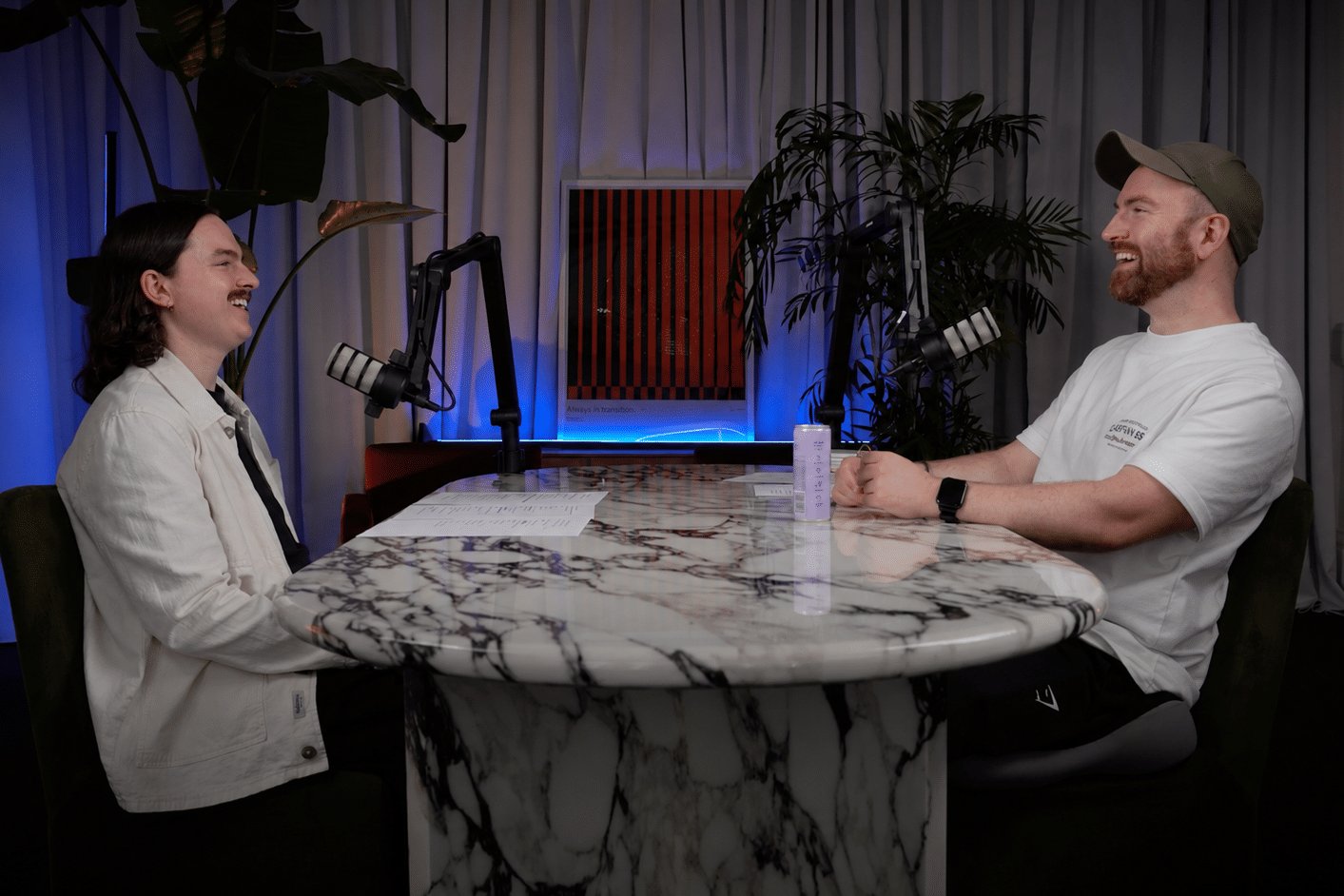
What It’s Like Working In An iGaming SEO Agency: Peeling Back The Curtain
Dylan and Alan, both SEO Managers at Big Pond, have worked in the agency for a combined 14 years. They wanted to share…

May 7, 2026
Ranking #1… Then Hit With a Fake DMCA Strike
In this episode, we break down the reality of fake DMCA attacks in iGaming. How they’re used, who’s behind them, and…