

Overview
In this episode we cover:
- Is Google struggling to control casino SERPs?
- The rise of fake DMCA attacks and negative SEO
- Why parasite SEO continues to work
- Expired domains and canonical manipulation explained
- Which blackhat SEO tactics are still effective in 2026
- How AI search and AI Overviews are changing organic traffic
- What operators and affiliates should prioritise to stay competitive
- Brand authority, entity building and the future of iGaming SEO
The Transcript
Hey guys, welcome to the latest episode of the iGaming SEO Show. I’m Dylan from Big Pond. I haven’t been on an episode in a couple at this point, but we’ve had some great guests on recently. But yeah, we’re here with Ari, the owner of Big Pond. Good to see you.
Good to see you too.
We’re just saying how you are crazy tanned and I look like a vampire.
It’s mild. I didn’t realise how tanned I was until I looked at the screen. I like that there’s a pretty big contrast between me and you.
Yeah, the contrast is pretty clear. I mean, you were on holiday recently, and I think it was a mix between Greece and also we’ve been getting quite good weather in Scotland too.
We have been. I came back and it was sunny for a couple of weeks and then it’s back to normal. Horrible.
Feels like it’s warm in here, but it feels like winter. Yeah, it does. I mean, it’s just Scotland — why are we surprised at this point? It’s always something we comment on, the weather. But yeah, there’s obviously been a lot going on in Google recently, to say the least. It probably looks nothing like it did when you started out.
How much has Google actually changed over the years?
Yes and no. I think there’s things that have been going on for the past — I’d say probably 12 years — that still are not really gone away. Like, you know, the parasites and expired domains, that’s another one. But yeah, it’s evolving, it’s changing very quickly. And obviously we had the algorithm update that launched at some point in May — I think it finished in June, didn’t it? So we had that and that changed quite a few things, especially within iGaming. As usual, quite a lot of winners and quite a lot of losers. You can never really get a balance, right? It’s always the same.
I feel like after an update, people panic and say things like SEO is dead.
Yeah. I’ve been doing this for 18 years and SEO has been dying since day one. It’s a zombie at this point. It’s come back from the dead multiple times. As SEOs it’s just same old, isn’t it? We just need to crack on. Move with the flow basically. I look at the updates, but I’ve stopped paying so much attention to them to the point where I was panicking, because it takes a while for the dust to settle, obviously, so you can actually look at things properly and evaluate what’s changed and what not. It’s just part of our job — that’s going to keep happening every few months.
Hopefully it’s going to be for the best.
As you say, there are winners that come out of it. And then any losers, you just have to see it as an opportunity to shift gear and try something different. A different channel.
Yeah, for some. There’s been some like, you know, tragic results for some affiliates. And informational sites as well — that’s another one out with iGaming. Never a dull moment.
The SERPs look very different now — but are a lot of the same old tactics still in play?
There’s a lot of that, and iGaming is prone to that. You know, like any super competitive industry, you’re going to get people that are at the top of the game when it comes to SEO — so it attracts a lot of talent, but at the same time it attracts a lot of spam, a lot of negative SEO practices, dodgy stuff going on, just because there’s a lot of money to be made. So it’s natural, but I quite like that — it keeps you going, keeps you engaged. It is frustrating too at the same time. Like the whole DMCA thing — I did a post on LinkedIn a couple of weeks ago saying that I never thought we’d be spending so much time in 2026 being reactive with the whole DMCA thing, and how much time it actually takes up from your day — managing that, flagging it, doing the counter notices, trying to find different ways to get it to work.
You did the episode on it recently, all about DMCA, but do you want to maybe sum up for someone that hasn’t seen it — what are we even talking about?
What’s actually been happening with DMCA strikes?
So this has obviously been one of the areas I’ve been focusing a lot lately when it comes to SEO for iGaming clients specifically. With the whole DMCA thing, we’ve seen over the past few months an influx of fake copyright attacks. Essentially what happens is somebody flags your website for copying — stating that you’ve copied all the content, it belongs to them, they had the original content. They type in a paragraph, they go through a process — it’s basically a form with a few different sections. You need to lie multiple times — I think three or four different times — to actually get the form submitted. Well, they do that anyway. And they can do that multiple times for any URL, the same page.
A lot of the times they’re unsuccessful, but it only takes one time for them to be successful, and then your page gets pulled down. You lose traffic, FTDs, overnight pretty much. And there was a lot of confusion on how to actually handle that — not just from us but from everybody in the industry. It’s a widespread problem. We’ve tried a few different things. Sometimes it seems to work, sometimes it doesn’t, but I think we’re actually getting better at doing the counter notices and getting back the content. The difficulty is that when you do a counter notice, you’re obviously being hit with an AI bot that replies back. So you need to sort of break through that.
An example we had recently through one of our clients, who also has an in-house head of SEO — they eventually filed a legal letter and it managed to go through and we got the pages back. For others, we’ve managed to get them back within a couple of hours. It just seems to be inconsistent, which is frustrating. But I think if you’re reactive and you react fast, and you can track — say for example your main URLs — and if you have evidence of previous attacks collated somewhere, you can actually reply and clearly state that this has happened multiple times. And I think the whole legal response seems to actually get noticed a bit more, because it’s not just a message from somebody — it’s actually a legal letter. So if you have something like that ready, you have more of a chance to get the page back.
Allan made a good point the other day — he’s surprised that Google don’t have kind of safeguards in place where, to save everyone’s time, pages that have been affected recently and been restored have some level of protection so they can’t just get taken down straight away again. Because then it’s just wasting everyone’s time. It clearly is the same tactic again. Google should be like, “Right, we went through the process of restoring that recently — obviously this could be a fake DMCA again.” It’s shown a lot of holes in Google’s processes.
100%. They’re basically using AI to do 90% of the responses — it’s not an actual person. It must get reviewed at some point and get reinstated, but I think it’s about going through to the right person, like passing that AI wall — maybe with a legal response — and getting to the right person that’s going to look at it and restore it quickly.
Does Google feel more broken than ever right now?
I think yes, it has. I mean, there’s always been loopholes that you can expose and take advantage of. However, I think they’re distracted by the whole AI race at the moment — as is, you know, everybody: all the different engines, agencies, everybody. It’s the new thing.
It’s exciting, but it’s also like, everyone’s jumping on. I’m sick of hearing it to be honest. GEO.
Yeah, there’s always been loopholes, but I think at the moment they’re more distracted with that. And it’s not a big enough issue to them at the moment — it takes a lot of people to actually make noise about it.
Is iGaming a case of exposing weaknesses across the board for all SERPs?
Yeah, I’d say so. I think one of the things that actually attracted me to the iGaming industry is that they’re pioneers in marketing in general — all the latest marketing tactics, the latest things get tried out in industries like iGaming and super competitive industries. And that sets the pace for what happens in the less competitive industries. Not necessarily the black hat stuff, but in general, SEO and marketing. By doing that, you also expose all the loopholes and all the dirty stuff.
Are we entering a new era with AI now in the mix?
100%. We’ve seen clients actually get results through AI, so we’re optimising for that. Google actually came out and basically said that good SEO equals good AI performance — and I’ve been saying that, along with a lot of people, for a long time. The fact that Google said it makes me want to go the opposite way, because they usually lie about things. But it is, you know, the same idea — like good SEO. They say a lot of things in terms of what doesn’t work — maybe to do with links or whatever — and these things still do work.
There are maybe a few extra layers to it that you can actually do. It’s not really ranking — it’s actually getting cited. Things like the listicle approach and getting the right publications to do a round-up. So for example, if you want to rank for like the best agency, you want key publications to write articles, include you and maybe other agencies, and that will actually influence whether you show up. That’s for AI overviews, ChatGPT and other AI engines too. But in terms of all the other usual technical side we do, topical authority, all that sort of stuff — it all feeds into it. Good SEO equals good results in AI.
And there are some examples where you try and optimise for Google and it doesn’t necessarily mean you optimise for ChatGPT or other engines, but with those few extra layers you can tick both off.
What’s the difference between AI overviews and AI mode? A lot of people seem to confuse the two.
The difference is that AI mode is almost like selecting that you want to search for like an image as opposed to a wider Google search — it’s a different option within the set of options. So like there’s the shopping option, the image option — AI mode is within that where you’re almost asking it to give you a certain level of depth of analysis based on what you’re putting in. Whereas an AI overview just comes up anyway when you’re creating a search. You don’t really have to do any additional actions to get it to come up.
And it’s annoyingly stealing the very top of the SERP from a lot of organic rankings. Even if you’re getting clients to rank top three now, they might not even get the same level of engagement or clicks or click-through rate as they would have a year ago, when AI overviews weren’t siphoning all that attention away from the top of the page. So it’s a good thing for users — if your client gets featured because you’ve been optimising them well and getting them known for the right things, Google will hopefully feature them in the AI overview. But at the same time, you’re getting a bit lost further down the page where position four and five used to be — that’s now effectively organic position one.
We had a kind of cringy model of “top five or die” for a certain client, and then on the last meeting with them they said, “It’s top three or die at this point.” And even if you’re in the top three, you can’t really guarantee anything, because as soon as someone starts clicking into the AI overview it drops your thing further and further down. And it doesn’t really guarantee clicks either. We’re seeing a lot of impressions, but you’re losing out on the clicks. There’s a lot going on as usual.
So what’s still actually working? Is parasite SEO still a thing?
Basically taking advantage of another website’s authority to gain traffic and make sales. So for example, if you take a big social media website, or even a review site like Trustpilot, or even a publisher — it could be like a big magazine — you can actually contribute articles, like Medium.com, something like that. A lot of them have been burnt in the past, but it’s about finding the next one that’s actually going to work. It’s a case of testing, because these websites have huge authority in Google, so you can create a page, put in your offer and content, and rank it and generate money that way.
It’s been used in iGaming consistently over the years. I remember when I first started as an affiliate, that was quite a big thing. You can still do it to this day — it’s just that certain publications, once they’ve been hammered to the point that everyone’s actually doing it, it gets noticed and stops working. Then you move on to the next one.
What about expired domains?
That’s been going for years too, and I quite like it. You can go and buy a website with existing authority, recycle the content, do a bit of link building, do all your normal SEO processes and revive it back from the dead basically. The advantage is that you’re not starting from zero link profile and zero authority — you’re starting from authority. There are certain things you need to do to actually make it work.
When I was doing affiliate marketing, I had my normal domains that I was building links to and operating as affiliates, and then I had my sort of more black hat experiments. For the last one I did, I bought four or five expired domains with authority and 301’d them to the money sites, then I was building tier two and tier three links to the redirects and also to the money site, and I managed to actually rank it and do quite well from that. So those are tactics people are using. But one of the main ones was the canonical abuse with expired domains.
Do you want to talk about that a bit further?
Yeah, it’s actually an interesting one because that’s been sort of cleared up since the latest updates, which is quite a good thing to see. Because you’d have one look at the UK SERPs or other countries for certain keywords and page one and page two, the majority of the results, would be all these sort of spam sites using the canonical trick. Which doesn’t make sense, because canonical tags were just a directive — it doesn’t mean it actually passes any value. It’s something you use almost like — if you have duplicate content, you use it to tell Google “here’s the original page, this is the duplicate one.” It was initially used for publishers like editorial content, to say “this is the original content, these are different drafts.” And obviously it’s been quite a prominent tactic for ecom sites, differentiating between product pages that have loads of different colours and sizes. But obviously that’s been another loophole that’s been exposed through iGaming and a few of the different industries.
They’ve nuked quite a lot of websites, which is quite nice to see. It’s not cleared up completely — for certain countries we’re actually still seeing them, and for certain casino keywords you can still see the results, but not as prominent.
Before that there was quite an aggressive use of it, an abuse of it. Because essentially you’d do the whole canonical thing and once it stopped working you’d reverse it and then start again — just a circle of repeating the same pattern. And it worked quite well.
Is the line between white hat and black hat becoming more blurred?
In iGaming it’s never white hat. I would argue in SEO in general it’s never really white hat — if you’re trying to influence rankings, that’s the whole idea. So it’s gray. Everything’s gray. It’s not organic in the true sense of it.
Exactly. But black hat has got different layers to it. There’s obviously the stuff with the expired domains — yes, it is black hat, you’re essentially breaking Google’s guidelines. But then you get the extreme stuff, which is DMCAs, hacking websites and injecting content and links. There are different levels of black hat.
I don’t mind black hat, but I don’t like the extreme versions. The DMCAs, hacking websites — I think all that needs to stop. What I’d like to see is an update that filters all that stuff out and a solution for the DMCA stuff.
What would a better DMCA process actually look like?
For DMCA stuff specifically, I think it would have to be something like ID verification. So say for example when you want to verify your profile on LinkedIn and get that tick — you have to go through a process where you need to scan your passport or your digital ID, and it’s all recorded. Obviously for the UK, I’m actually maybe against the whole digitisation and tracking of everything. But having some sort of ID verification would cut out everything — or I’d say 99% of it. Because at the moment the issue is that anybody and their uncle can actually go on, log on, and launch a fake DMCA strike against you. So having some sort of ID verification would help solve that issue.
That makes sense. It’s more intuitive than just letting it be a free-for-all, because the abuse could just be endless.
Back to DMCA practically — what’s your top tip for an operator in the first 24 hours after a strike?
You want to catch it very quickly. If you’re watching this now and you’ve had issues in the past and managed to get your pages back, you’re probably going to keep getting hit, especially if you rank prominently. So what I would say is you can use a simple rank tracker initially and basically track your top pages. Or if it’s a smaller operation, you can even do that manually — you know, type the URL into Google, see if it’s indexed. It’s probably not sustainable if you run a big operation — you probably need a custom tool — but there’s a lot you can actually do with a simple rank tracker or just checking your key pages, your key money drivers, to make sure they’re actually in the index.
There’s stuff you can do to actually protect things too, like getting copyrights. I’m not sure if that’s really effective because you still might have to go through the same process — it doesn’t stop it. So I think you need to be reactive. You need to be able to catch it quickly. And there’s obviously the episode where we quoted the option you want to pick when you’re actually doing the counter notice — there’s one that tends to get pages back a lot faster. And I think if you combine that with a legal response, that’s probably your best chance. And doing it through someone’s email at the company that’s quite prominent — I mean, I don’t think there’s hard evidence about that, but we’d rather do it through the official company email than a third party agency. Although I don’t think it matters as long as you actually state who you are and everything’s actually clear. It’s just another thing in the mix to hopefully get through it quicker.
Moving on — parasite SEO, expired domains, canonical abuse, DMCAs. Is there a theme here when it comes to white hat vs black hat?
Yeah. And moving on from the DMCA stuff — one of the big themes right now in SERPs is parasite SEO. And also, you know, all these changes in SERPs. They look different from how things probably looked when you started out, but a lot of the same tactics as you say are coming back, or maybe haven’t left and people are just exploiting them to different degrees.
There’s a lot of that. And iGaming is prone to that. Any super competitive industry — you’re going to get people at the top of their game, but you also get the spam and the negative SEO practices just because there’s so much money involved. It keeps you engaged, but it’s frustrating at the same time.
What about AI in the SERPs specifically — overviews versus AI mode?
Obviously we’ve talked a lot about AI already. You’ve got AI making its way into SERPs in different ways. If you go on a lot of searches right now, your Google SERP will have an AI overview at the top, which you don’t have control over — it serves it to you anyway. And then this is distinct from AI mode, which a lot of people kind of confuse, and that’s almost a separate way of searching.
The difference is that AI mode is almost like selecting that you want to search via image as opposed to a wider Google search — it’s a different option within the set of options. Like there’s shopping, images — AI mode is within that, where you’re asking it to give you a certain level of depth of analysis. Whereas an AI overview just comes up anyway when you create a search without any additional action.
And it’s annoyingly stealing the very top of the SERP from organic rankings. Even ranking top three now, you might not get the same click-through rate as you would a year ago. The whole goal is for Google to become more of an answer engine — like ChatGPT, Claude, Perplexity and all the different ones. You know, rank in the top three and your clicks are way down compared to a few years ago. We had that cringy model of “top five or die” with a certain client, and then they said it was “top three or die at this point” — and even then, you can’t really guarantee anything.
How are you thinking about tracking all of this as it gets more complex?
Tracking all this is getting a lot harder. Every single SEO tool at the moment has a module for tracking AI, but it’s not quite there yet. With rank tracking it’s very simple — but with AI it’s more about citations, and the result is completely different from device to device, from different browsers. Even from one side of the room to the other on the same person. So how do you actually track that? It’s very hard and it’s changing constantly, so all these tools have to keep investing to actually change and keep up. It’s going to be interesting. But I guess it makes our job more interesting too, because you’re optimising for all these different platforms now, not just for Google. We can’t get complacent.
We actually noticed earlier that there’s a new thing in Google Analytics 4 where it said there was a user coming through “AI assistant” — just interesting how they phrase that. We had to look up what it actually meant, and I think it basically encompasses like all the AI tools. So vague. But you can see they’re trying to make moves into categorising things better, and it must be hard for Google too — the whole attribution thing. There are different laws across different countries, tracking, GDPR, everything. I remember the good old days when we used to get a lot more data. Now it’s the wild west.
You can have multiple sources of data and paint the picture — I’m ranking for this, I’m getting cited for this, I’m getting X amount of registrations and FTDs. As long as you actually test that and keep tabs, you can move in the right direction. And work with the client too — ideally they should be asking their users where they saw them and trying to align it all together, so attribution becomes a group effort rather than everyone working in silos. Creating a story, a picture of where the user came from.
So to sum everything up — what should casinos and affiliates actually focus on? Some actionable tips.
When it comes to brand authority, I think one thing both affiliates and operators can actually focus on is the whole branding thing. In the past you’d build a website, rank it, focus on maybe one or two channels, get them to a point where they’re sustainably driving FTDs and traffic, and then maybe introduce another channel as you go — and that is a good strategy. However, you need to be building a brand. You need to be thinking: we’re not just doing this for the traffic and the FTDs, we’re actually building something that has meaning.
So you need to start building a brand, having a reputation, having an angle in a very crowded market. There are so many casinos that launch, so many sports books — but what’s the angle? What’s the USP? The differentiator between you and all the different brands that launch every week.
Building a brand — it’s about being active on socials. Now you can fake that obviously, but it’s actually harder to do these days. You need to focus on real UX metrics, having a presence on social media — whether it’s two or three channels, it doesn’t have to be everything. But from an entity point of view, even if you’re active on two or three channels, you still need a profile everywhere. Whether it’s review profiles — anywhere that your competitors are and more — you just need to make a big list and have a semi-decent profile and some presence there. Consistency is key.
It’s a bit like when we used to do local SEO citations with the whole NAP thing. If your brand is actually consistent across multiple websites, it leaves no room for guessing — Google is very clear on who you are. They see you as a real brand and can see the metrics coming in from the social profiles you’re active on.
Topical authority obviously, being relevant, focusing on topical relevancy. And if you can go niche, that’s even better — you’re almost positioned as the experts within that niche or sub-niche. And all the usual stuff still counts: technical SEO, digital PR, link building, entity building. But it’s about what you do branding-wise on top of that too.
One thing I’ve seen affiliates do wrong — we’ve had quite a few examples come to us for audits — they’ve redesigned their websites using JavaScript just to get better metrics, and that’s completely the wrong way to go. LLMs can’t see it. Google can barely see it — Google’s getting better, but it’s completely the wrong thing to do. Be conscious of what engines actually see and index.
To summarise — aim to build a brand, do all the normal traditional SEO stuff, but aim to build a brand and have real metrics and real visibility across the board. A community — it sounds like kumbaya, but if there are people actually engaging with you and posting about you, that’s what you need in this day and age. User generated content.
We’ve covered a lot today, and clearly there’s a lot going on — but as you can see, it keeps it exciting. If you enjoyed this episode, you can subscribe to the channel and give it a like. Share it around, get us seen by more people, and we’ll see you on the next episode. Good to see you.
Good to see you too. Cheers.
Related Insights
iGaming News, SEO Tips & Updates
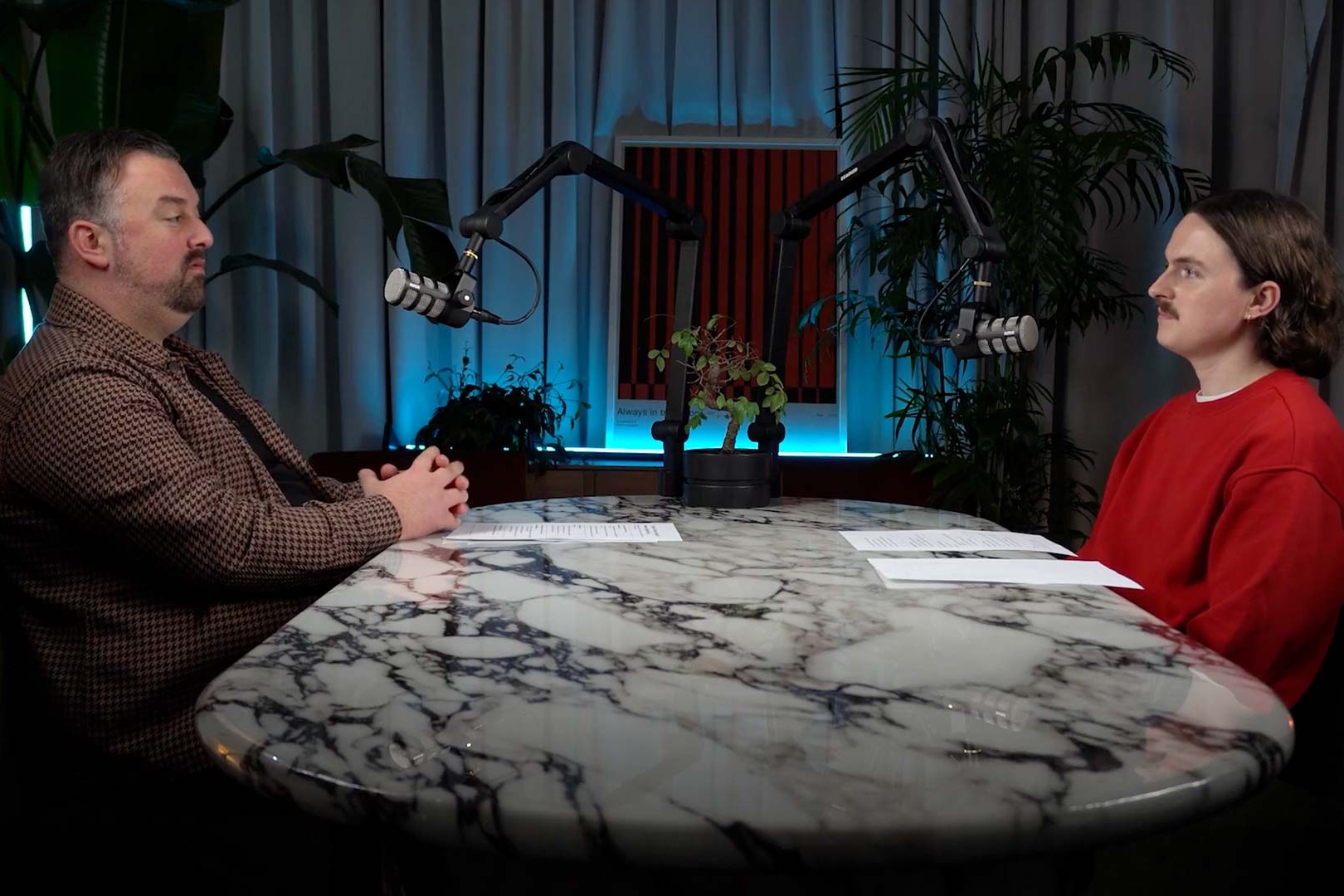
January 5, 2026
The iGaming SEO Show – Big Pond Podcast – E01
Welcome to the first episode of the Igaming SEO Show. Hosted by Ari Pournaras (Founder of Big Pond Digital) and Dylan…
May 7, 2026
Ranking #1… Then Hit With a Fake DMCA Strike
In this episode, we break down the reality of fake DMCA attacks in iGaming. How they’re used, who’s behind them, and…
June 9, 2026
The Future of iGaming Affiliates: AI, SEO & Survival in 2026
In this episode of The iGaming SEO Show, we're joined by Elaine Gardiner, founder of TAG Media and Affie.ai, to discuss…